


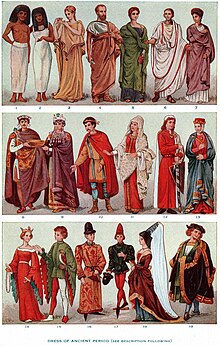
Physically, clothing serves many purposes, including:
- protection from uncomfortably hot or cold weather
- protection during hazardous activities such as hunting, hiking, cooking and the production of arts and crafts
- Protection from very hazardous situations such as fire or the effects of warfare or terrorism
- social identification of the social class of strangers by means of informal clothing styles or uniforms
- identification of members of a particular team, group or political affiliations.
- deception involving the use of disguise
- social intimidation or reassurance by associating particular forms of dress code with functions such as religious or military activities that may be beneficial or harmful to the observer.
Ordinary clothes also provide some protection from minor risks such as insect bites, splinters and limiting the transmission of a range of hazards such as germs or harmful UV radiation.
Clothing can and has in history been made from a very wide variety of materials. Materials have ranged from leather and furs, to woven materials, to elaborate and exotic natural and synthetic fabrics.
Not all body coverings are regarded as clothing. Articles carried rather than worn (such as purses), worn on a single part of the body and easily removed (scarves), worn purely for adornment (jewelry), or those that serve a function other than protection (eyeglasses), are normally considered accessories rather than clothing,[citation needed] as are footwear and hats.
malaysian wears with different races
clothes matching with shoe
clothes for girls Bohemian Style Clothing
some tutorial


No comments:
Post a Comment